

Philadelphia Criminal Defense Blog

PA Supreme Court Fails to Reach Decision on Whether Search Warrant Required for Google’s Search Records

Criminal Lawyer Zak Goldstein
On December 16, 2025, the Pennsylvania Supreme Court issued a fractured decision in Commonwealth v. Kurtz, addressing a cutting-edge digital privacy question: do you have a reasonable expectation of privacy in the terms you type into a Google search bar?
The Court’s answer was “no”—at least for general, unprotected searches. However, because the decision was reached by a plurality (meaning a majority of justices did not agree on a single legal reasoning), it is not binding, and the ruling leaves significant questions unanswered regarding other types of digital data, particularly Internet Service Provider (ISP) records and IP address subscriber information.
Commonwealth v. Kurtz: The “Reverse Keyword” Warrant
In Kurtz, police were investigating a violent home invasion rape but had no DNA match or suspect. Investigators obtained a “reverse keyword search warrant” compelling Google to identify any IP addresses that had searched for the victim’s home address prior to the crime. Google identified an IP address associated with the defendant, leading to additional investigation, an eventual DNA match, and his conviction for rape in this case and other unsolved cases.
The defendant challenged the warrant, arguing he had a privacy interest in his search history and that the warrant provided no reason to believe that the perpetrator conducted a Google search at all let alone for the victim’s address. The trial court rejected this claim, and the defendant appealed. The Superior Court rejected the claim, too, finding that the defendant did not have a reasonable expectation of privacy in the records maintained by Google and that the police had obtained a legitimate search warrant even if he did. The defendant petitioned the Supreme Court for review, and the Pennsylvania Supreme Court agreed to hear the case. That Court, however, failed to reach a decision - three justices concluded that he had no reasonable expectation of privacy in the search records, three concluded that the warrant was fine and declined to address the REOP decision, and one justice would have granted the motion to suppress.
Accordingly, the Court affirmed the defendant’s conviction as it would have required four justices to vote to overturn it. In support of upholding the conviction, Justice Wecht authored an Opinion Announcing the Judgment of the Court (OAJC) which reasoned that the defendant did not have a reasonable expectation of privacy in the information and that investigators did not have to obtain a warrant at all because:
Voluntary Disclosure: By typing a query into Google, the user voluntarily discloses that information to a third party, meaning the user does not make an attempt to keep the information private.
Notice: Google’s privacy policy explicitly warns users that it collects search queries and shares them with law enforcement.
Lack of Necessity: The Court noted that using Google is a choice, not a necessity; users can use other search engines, libraries, or physical maps. They can also take steps to shield their identities and increase their privacy.
Accordingly, the defendant had no reasonable expectation of privacy in the search results.
Why Kurtz Is Not the Final Word
While Kurtz is a significant ruling for search history and the Superior Court’s ruling stands, it is not a total defeat for digital privacy rights in Pennsylvania for two key reasons:
1. It Is a Plurality Opinion: Crucially, the main opinion in Kurtz was joined by only three of the seven justices. When a court decides a case without a majority opinion, the holding is generally limited to the specific result of that case, and the legal reasoning is not fully binding precedent for future cases. This means the broad language about the third-party doctrine may not apply automatically to different factual scenarios or even similar scenarios.
2. It Is Limited to "Unprotected" Searches: The Court repeatedly stressed that its ruling applied only to “general, unprotected internet searches.” The justices expressly stated they were not deciding the privacy rights of users who utilize Virtual Private Networks (VPNs), private browsing modes, or encrypted browsers. Moreover, the courts have required legitimate search warrants where investigators seek to obtain bank records, phone records, and location data.
The Next Battleground: IP Addresses and ISP Records
The Kurtz decision creates a sharp distinction that defense attorneys can use in cases involving IP addresses and ISP subscriber records (the information “behind” the IP address, such as the customer's name and address).
In Kurtz, the Court emphasized that users have a choice: they can use Google, or they can use a privacy-focused competitor (like DuckDuckGo) or offline resources . However, this logic does not apply to IP addresses. Kurtz dealt with whether the police could obtain a list of IP addresses that had searched for a particular address. It did not address whether the police could obtain the information behind the resulting IP addresses without a search warrant, and in Pennsylvania, police often use administrative subpoenas to obtain that information rather than warrants. Whether they can do that under the Pennsylvania Constitution remains questionable for the following reasons:
Necessity vs. Convenience: You cannot use the internet without an IP address. It is technologically impossible. Unlike choosing a search engine, assigning an IP address is an involuntary condition of internet access, similar to how bank records or phone numbers are necessary to participate in modern life. Pennsylvania courts have long held that citizens do have privacy rights in bank records (Commonwealth v. DeJohn) and phone records (Commonwealth v. Melilli) because they are essential services.
The “Information Behind the IP”: Kurtz dealt with the content of a search communicated to Google. ISP inquiries deal with the identity of the user maintained by the internet provider. This information is generated automatically by the ISP, not voluntarily typed out by the user.
The Takeaway
At least for now, Commonwealth v. Kurtz establishes that if you type a search into Google without privacy protections, you cannot expect that search to remain private from police. However, because the decision relies heavily on the “voluntary” nature of using Google and Google’s explicit privacy warnings, it may not extend to the mandatory, automatic records generated by simply connecting to the internet via an ISP.
If you are facing charges based on digital evidence, IP address identification, or administrative subpoenas, the specific technical details of your case matter. The law is evolving rapidly, and a nuanced defense strategy is essential.
Facing criminal charges? We can help.

Goldstein Mehta LLC Criminal Defense
If you are under investigation or facing charges involving digital evidence, search warrants, or administrative subpoenas, we can help. We have successfully defended thousands of clients against criminal charges in courts throughout Pennsylvania and New Jersey. Our award-winning Philadelphia criminal defense lawyers offer a free criminal defense strategy session to any potential client. Call 267-225-2545 to speak with an experienced and understanding defense attorney today.

PA Supreme Court: Expert Testimony on “Manner of Death” Must Be Held to a Reasonable Degree of Medical Certainty
Criminal Defense Lawyer Zak T. Goldstein, Esquire
The Pennsylvania Supreme Court has issued a significant decision in Commonwealth v. Fitzpatrick, ruling that expert witnesses testifying about the "manner of death" in a homicide case must hold their opinions to a "reasonable degree of medical certainty." The Court rejected the Commonwealth’s argument that a lower standard—mere probability—should apply when an expert offers an opinion on whether a death was a homicide or an accident.
This ruling is a critical victory for defendants because it prevents the prosecution from using expert witnesses who are merely guessing or who cannot stand behind their conclusions with the requisite level of professional certainty.
The Facts of the Case
The case arose from a tragic incident in 2012. On June 6, 2012, Annemarie Fitzpatrick drowned in Muddy Creek, a tributary of the Susquehanna River. Her husband, Joseph Fitzpatrick, claimed that they were riding an ATV when the vehicle flipped backwards, throwing them both into the water. He claimed he could not save her.
Police investigations later uncovered suspicious circumstances, including a note in Annemarie’s day planner reading "If something happens to me—JOE," an extramarital affair, and significant life insurance policies. Joseph Fitzpatrick was eventually charged with and convicted of first-degree murder. However, that conviction was overturned because the trial court had improperly admitted the victim's note as evidence.
As the Commonwealth prepared for a retrial, they sought to introduce a new expert witness, Dr. James Caruso. Dr. Caruso, a forensic pathologist, was set to testify that the "manner of death" was homicide rather than an accident. However, during a pre-trial hearing, Dr. Caruso admitted that he did not hold this opinion to a "reasonable degree of medical certainty." Instead, he testified that he believed it was "more likely than not" a homicide.
The trial court ruled that Dr. Caruso’s testimony was inadmissible because it failed to meet the legal standard for expert testimony. The Commonwealth appealed, and the Superior Court reversed the trial court, creating a new rule that "manner of death" opinions need only be "probable" or "sturdy" rather than reasonably certain. The defense appealed to the Pennsylvania Supreme Court.
The Legal Issue
The issue before the Supreme Court was whether expert testimony regarding the manner of death (e.g., homicide, suicide, accident) is subject to the same strict evidentiary standards as testimony regarding the cause of death (e.g., drowning, gunshot wound).
The Commonwealth argued that because a jury can determine the manner of death without expert assistance, an expert who does testify on the subject should not be held to the strict "reasonable degree of medical certainty" standard. They argued that a "more likely than not" standard was sufficient.
The Supreme Court's Decision
In a definitive opinion written by Justice Wecht, the Pennsylvania Supreme Court reversed the Superior Court and reinstated the trial court’s order excluding the expert testimony.
The Court held that all expert testimony, regardless of the topic, must be held to a reasonable degree of professional certainty. The Court explained that experts enjoy a privileged place in the courtroom and are permitted to offer opinions on ultimate issues that lay witnesses cannot. Because of this power, their opinions must be "based on a reasonable degree of medical certainty rather than upon mere speculation".
The Court explicitly rejected the Superior Court's attempt to lower the bar for manner of death testimony. The Court noted that allowing an expert to testify that a homicide was “more likely than not” (a 51% probability) would violate long-standing evidentiary rules, specifically citing the precedent in Griffin, where a 51/49 probability was deemed inadmissible.
Because Dr. Caruso admitted he could not state his opinion to a reasonable degree of medical certainty, his testimony was mere speculation in the eyes of the law and therefore inadmissible.
Key Takeaway
This case reinforces a fundamental protection for criminal defendants in Pennsylvania. The prosecution cannot bolster its case with expert witnesses who are unsure of their conclusions. If an expert is going to tell a jury that a death was a homicide, they must be able to say so with professional certainty, not just as a probability or a guess.
This decision also highlights the importance of rigorous pre-trial litigation. By challenging the expert's qualifications and the certainty of his opinion before the trial began, the defense prevented damaging, unreliable testimony from ever reaching the jury. It is always much harder to undo a wrongful conviction after the fact as appellate courts are often reluctant to overturn jury verdicts and may find harmless error. Additionally, appeals can take years, so even a successful appeal may mean the defendant has spent years in prison during the litigation before winning.
Facing Criminal Charges? We Can Help.

Goldstein Mehta LLC Criminal Defense
If you are facing criminal charges or are under investigation by the police, we can help. We have successfully defended thousands of clients against criminal charges in courts throughout Pennsylvania and New Jersey. We have successfully obtained full acquittals and dismissals in cases involving charges such as Homicide, Aggravated Assault, Rape, and Violations of the Uniform Firearms Act. Our award-winning Philadelphia criminal defense lawyers offer a free criminal defense strategy session to any potential client. Call 267-225-2545 to speak with an experienced and understanding defense attorney today.

PA Superior Court Affirms Homicide by Vehicle while DUI Conviction Despite Inconsistent Verdicts
Commonwealth v. Kling

Philadelphia Criminal Lawyer Zak T. Goldstein, Esquire
The Pennsylvania Superior Court has decided the case of Commonwealth v. Kling, affirming a defendant’s conviction for Homicide by Vehicle while Driving Under the Influence ("DUI") and Homicide by Vehicle.
The decision is significant for Pennsylvania DUI defense because it addresses “inconsistent verdicts.” Specifically, it addresses whether a defendant can be convicted of causing death while under the influence even if a jury acquits them of the specific DUI charge that involves being “impaired.”
The Facts of the Case
On April 20, 2023, the defendant was operating a motorcycle with a passenger on High Street in Limerick Township. At a red light, a Honda Accord driven by a third person pulled up beside him. When the light turned green, both vehicles accelerated rapidly toward a merge point about a quarter-mile away.
Witnesses and surveillance video established that neither driver would yield. As they approached the merge point, the Honda Accord overtook the motorcycle and merged into the left lane. The defendant struck the back of the Honda, causing the motorcycle to crash. His passenger was thrown from the bike and killed.
Police and EMS arrived and noted that the defendant appeared dazed, had pinpoint pupils, and was in pain. The defendant admitted he did not have a motorcycle license and the bike was unregistered. Toxicology reports later revealed fentanyl, amphetamine, and methamphetamine in the defendant’s blood.
The Inconsistent Verdicts
At trial, the Commonwealth charged the defendant with multiple counts of DUI. Notably, the jury acquitted him of DUI under 75 Pa.C.S. § 3802(d)(2), which requires proof that the defendant was under the influence to a degree that impaired their ability to safely drive.
However, the jury convicted him of DUI under § 3802(d)(1), which prohibits driving with any amount of a Schedule I controlled substance (or metabolite) in the blood, regardless of actual impairment. They also convicted him of Homicide by Vehicle while DUI. The conviction under § 3802(d)(1) did not require actual impairment. He received a lengthy state prison sentence.
The Appeal
The defendant appealed, arguing that the evidence was insufficient to support the Homicide by Vehicle while DUI conviction.
His argument was based on causation. To be convicted of Homicide by Vehicle while DUI, the Commonwealth must prove that the death was the "result of" the DUI violation. The defendant argued that because the jury acquitted him of the impairment charge (§ 3802(d)(2)), the Commonwealth failed to prove that he was actually impaired or that his intoxication caused the crash. He relied on Commonwealth v. Magliocco, arguing that an acquittal on a predicate offense should invalidate the greater offense.
The Superior Court's Decision
The Superior Court rejected the defendant’s arguments and affirmed the judgment of sentence.
1. Inconsistent Verdicts Are Permitted: The Court explained that inconsistent verdicts are generally allowed in Pennsylvania. The jury may have acquitted the defendant of the impairment DUI for reasons of leniency rather than a factual finding that he was sober. As long as the defendant was convicted of a violation of Section 3802 (in this case, having drugs in his system), the statutory requirement for the Homicide by Vehicle while DUI charge was met. The acquittal on the (d)(2) charge did not negate the elements of the homicide charge as a matter of law.
2. Evidence of Causation Was Sufficient: Even without a conviction on the impairment count, the Court found sufficient evidence that the defendant’s drug use caused the death. The Commonwealth presented expert testimony that high doses of methamphetamine can cause aggressive, impulsive, and risky driving.
The Court distinguished this case from Commonwealth v. Lenhart, where a driver with a high BAC crashed but there was no evidence of how the accident happened. Here, there was ample evidence of reckless driving. Specifically, the "deadly race" to the merge point. The Court concluded the jury could infer that the drugs in the defendant’s system contributed to this aggressive behavior, thereby causing the crash.
3. Recklessness Established: The Court also upheld the separate conviction for Homicide by Vehicle (which requires recklessness but not necessarily DUI). The Court held that the defendant’s decision to race another car to a merge point while unlicensed, driving an unregistered bike, and carrying a passenger without a helmet showed a conscious disregard for the value of human life.
Conclusion
This case reinforces that Pennsylvania courts will often uphold serious felony convictions even when jury verdicts appear logically inconsistent. It also highlights the danger of per se DUI charges (based solely on the presence of drugs in the blood) serving as the basis for Homicide by Vehicle convictions, provided the Commonwealth can link the drug presence to the driving behavior.
It remains true, however, that evidence of a DUI and a death is not enough for a homicide by vehicle while DUI conviction. Instead, the Commonwealth must show that the DUI actually caused the death. Here, the Court found that there was sufficient evidence. And even though the homicide by vehicle while DUI statute requires a DUI conviction and the defendant was acquitted of the DUI section that requires impairment, the Court affirmed the conviction because he was still convicted of a DUI. The Superior Court simply found no requirement that the defendant be convicted of any particular subsection and refused to draw any factual inferences from the jury’s acquittal.
The inconsistent verdict rule is hard to reconcile with common sense, and it is often inconsistently applied as there are some cases where it has been rejected. But in most cases, the courts will disregard an inconsistency verdict and instead look only at evidentiary sufficiency.
Facing Criminal Charges? We Can Help.

Goldstein Mehta LLC Criminal Defense
If you are facing criminal charges or under investigation by the police, we can help. We have successfully defended thousands of clients against criminal charges in courts throughout Pennsylvania and New Jersey. We have successfully obtained full acquittals and dismissals in cases involving charges such as Conspiracy, Aggravated Assault, Rape, Violations of the Uniform Firearms Act, and Homicide by Vehicle.
Our award-winning Philadelphia criminal defense lawyers offer a free criminal defense strategy session to any potential client. Call 267-225-2545 to speak with an experienced and understanding defense attorney today.
US Supreme Court Clarifies Standard for Warrantless Home Entries During Emergencies: Reasonable Basis, Not Probable Cause, is Required

Criminal Defense Lawyer Zak T. Goldstein, Esquire
The Supreme Court of the United States has issued a unanimous decision in Case v. Montana, settling a disagreement among lower courts about when police may enter a private home without a warrant to provide emergency assistance.
In an opinion authored by Justice Kagan, the Court held that police do not need probable cause to enter a home to render emergency aid. Instead, officers only need an “objectively reasonable basis” for believing that an occupant is seriously injured or imminently threatened by such injury. This ruling reinforces the standard previously set in Brigham City v. Stuart and rejects the argument that the arguably higher “probable cause” standard used in criminal investigations should apply to emergency aid situations.
The Facts of the Case
The case arose from a domestic disturbance in Montana. The petitioner, William Case, allegedly called his ex-girlfriend and threatened to kill himself. During the call, she heard what sounded like a gun cocking, followed by a “pop” and then silence. She immediately called 911 and drove to his home.
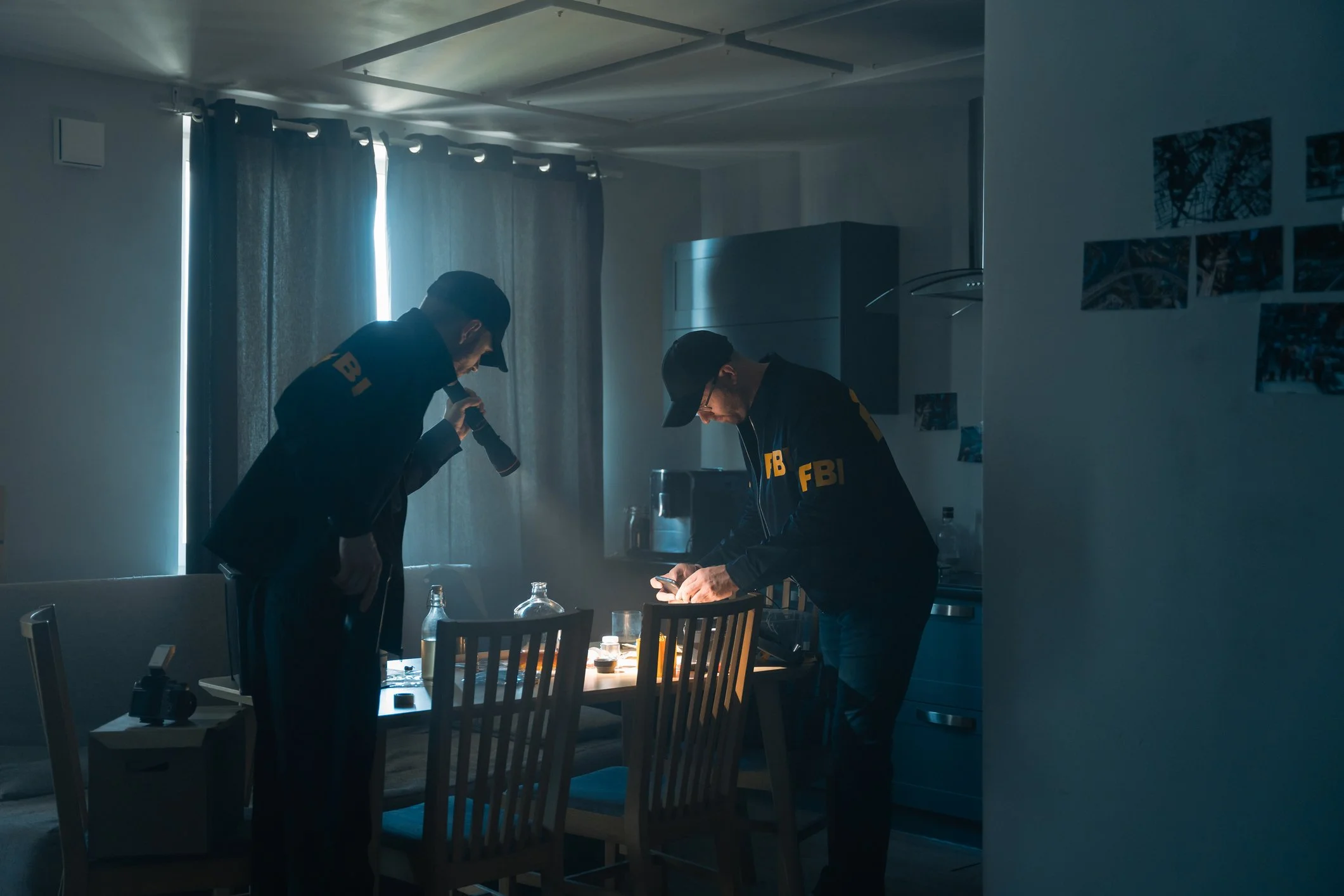
The police drove to the home, as well. When police officers arrived, they knocked on the doors and yelled into an open window but received no response. Peering inside with flashlights, they saw an empty handgun holster and a notepad that appeared to contain a suicide note. Concerned that Case might have shot himself and was bleeding out, the officers decided to enter the home without a warrant to render emergency aid.
Upon entering a bedroom, Case emerged from a closet holding an object that looked like a gun. An officer, fearing for his safety, shot and injured Case. Case survived and was subsequently charged with assaulting a police officer. He moved to suppress the evidence obtained during the entry, arguing that the warrantless entry violated his Fourth Amendment rights.
The Legal Issue on Appeal: Probable Cause vs. Reasonable Basis
The Fourth Amendment generally protects the home from warrantless searches and seizures. However, there are exceptions, including the “emergency aid” exception.
The legal dispute in Case v. Montana centered on the standard of proof required for this exception. Case argued that because the home is constitutionally protected, officers should be required to have probable cause to believe an emergency exists. Probably cause is the same standard used for criminal warrants.
The Montana Supreme Court had upheld the entry but used a “community caretaker” doctrine that resembled a lower “reasonable suspicion” standard often used for street stops and car searches such as Terry frisks. The defendant appealed to the U.S. Supreme Court, asking the Justices to impose the stricter probable cause requirement.
The Supreme Court’s Decision
The Supreme Court unanimously rejected the application of the probable cause standard to emergency aid cases. Justice Kagan explained that the concept of “probable cause” is “peculiarly related to criminal investigations” and assesses the likelihood of finding evidence of a crime.
The Court held that transplanting criminal law standards into a non-investigatory, lifesaving context makes little sense. Instead, the Court reaffirmed the rule from Brigham City v. Stuart: officers may enter a home without a warrant if they have an “objectively reasonable basis for believing” that an occupant is seriously injured or imminently threatened.
Applying this standard to the facts, the Court found the officers’ entry was lawful. The combination of the specific suicide threat, the “pop” heard over the phone, and the visual observation of the empty holster and suicide note gave officers a reasonable basis to believe Case needed immediate medical attention.
Key Takeaways
This decision provides clarity for both law enforcement and defense attorneys regarding the “emergency aid” exception:
Distinct from Criminal Investigation: The Court firmly separated emergency aid entries from criminal investigations. The higher “probable cause” standard does not apply when the primary purpose is saving lives, not gathering evidence.
Limited Scope of Entry: Importantly, the Court noted that this exception is not an open invitation to search. An emergency aid entry “provides no basis to search the premises beyond what is reasonably needed to deal with the emergency.” If police enter to check on a suicidal person, they cannot start rummaging through drawers for drugs unless those drawers are relevant to the emergency.
Community Caretaking Clarified: The Court criticized the lower court's reliance on the “community caretaker” doctrine, reiterating that broad community caretaking duties do not justify warrantless home entries on their own; there must be an actual exigency or emergency.
Facing criminal charges? We can help.

Philadelphia Criminal Defense Lawyer Zak Goldstein
If you are facing criminal charges or under investigation by the police, we can help. We have successfully defended thousands of clients against criminal charges in courts throughout Pennsylvania and New Jersey. We have successfully obtained full acquittals and dismissals in cases involving charges such as Conspiracy, Aggravated Assault, Rape, Violations of the Uniform Firearms Act, and First-Degree Murder. We have also won criminal appeals and PCRAs in state and federal court, including the successful direct appeal of a first-degree murder conviction and the exoneration of a client who spent 33 years in prison for a murder he did not commit. Our award-winning Philadelphia criminal defense lawyers offer a free criminal defense strategy session to any potential client. Call 267-225-2545 to speak with an experienced and understanding defense attorney today.